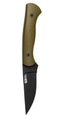
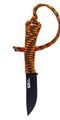
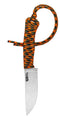
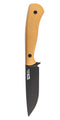
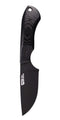
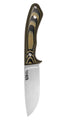
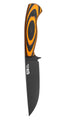
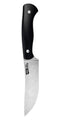
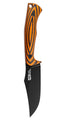
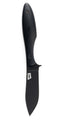
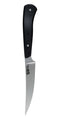
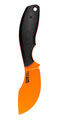
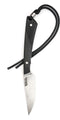
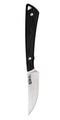
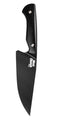
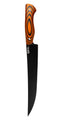
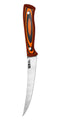
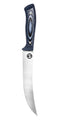
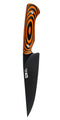
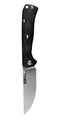
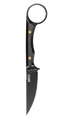
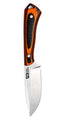
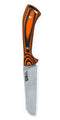
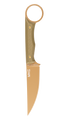
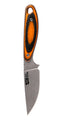
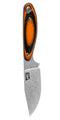
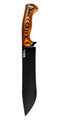
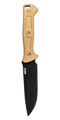
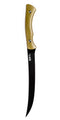
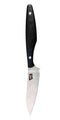
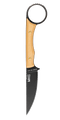
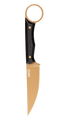
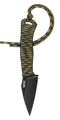
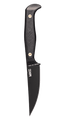
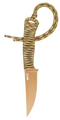
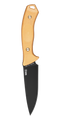

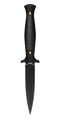




The best boning knife is a semi-flexible, five-to-seven-inch blade made from a premium stainless steel like MagnaCut. It separates meat from bone with minimal waste, works around joints and connective tissue, and handles proteins from chicken breasts to wild game quarters. The right blade for you depends on what you cut most, where you cut it, and how much you process in a season.
We partnered with Scott and Seth Perkins, the Bearded Butchers, to design the MKC Boning Butcher Knife. Between the Bearded Butchers’ daily professional experience and the thousands of animals Montana Knife Company fans process every year, we’ve learned what separates a good boning knife from a great one.
What Is a Boning Knife?
A boning knife has a narrow, pointed blade built for one job: removing bones from meat. The thin profile reaches into tight spaces between joints, around knuckles, and along curved bone surfaces where a chef’s knife can’t follow.
But boning knives handle more than bone removal. They peel silver skin off tenderloins, trim fat from roasts, separate muscle groups for portioning, and work through connective tissue in shoulders and necks. The Bearded Butchers put it plainly:
“If you took all of our knives away and gave us any particular task and said you can only use one knife, we’re going to choose the boning knife. You can break knuckles off, take legs off, even field butcher a buffalo. You can literally do every task with it.”
That versatility is why a boning knife earns its place in both the kitchen drawer and the pack-out kit.
Flexible vs. Stiff vs. Semi-Flex: Match Your Blade to the Protein
Blade flexibility is the single most important variable when picking a boning knife. Flexibility affects how your boning knife handles different proteins.
Flexible blades bend under light finger pressure. They hug curved bones, fish spines, and poultry rib cages, following contours without leaving meat behind. Pick a flexible blade for filleting fish, breaking down chicken and turkey, and peeling silver skin from tenderloins.
Stiff blades resist bending. They power through dense connective tissue in large beef or pork cuts where control matters more than contour-following. If you regularly process beef primals, pork shoulders, or thick game cuts, a stiff boning knife carves wide, clean sections without slipping.
Semi-flex blades split the difference, and they’re the best pick for anyone who processes a mix of proteins. A semi-flex blade gives enough to work around knuckles and joints without losing the rigidity needed for trimming a brisket or portioning a pork loin.
The Bearded Butchers prefer that middle ground: “We really like a semi-stiff blade because that allows you to work around those knuckles and bones. As your blade flexes, it helps you find those grooves and where to cut.”
What Size Boning Knife Do You Need?
Boning knives run five to seven inches. The right length depends on the proteins and tasks you handle most.
Five-inch blades give maximum control for detail work: deboning chicken thighs, separating small joints, and working in tight spaces on poultry and small game.
Six-inch blades hit the sweet spot for most people. They reach deep enough for pork loins and lamb legs while staying short enough for precision. The Bearded Butchers call six inches the ideal boning knife length. “A six-inch blade is dang near perfect because any longer than that, you’re at risk of cutting yourself. When you’re butchering, it’s all about control of your wrist and pinpoint accuracy on the tip of the knife.”
Seven-inch blades give extra reach for large cuts, like whole briskets, beef rib sections, and big game quarters. The additional surface area allows for longer strokes, but the extra length can reduce precision around tight joints.
If you only buy one size, start at six inches and build from there.

Straight vs. Curved Blade
A boning knife’s spine profile affects how the blade moves through meat.
Curved blades follow the natural arc of bones, joints, and muscle groups. The curve lets you make long, sweeping strokes that separate meat from bone in fewer passes. Most butchers prefer a curve for all-around work because the shape reduces snagging at the tip and lets you rock through connective tissue. The Bearded Butchers agree. “A smooth, curving blade allows for precise, effortless cuts and long strokes.”
Straight blades give better control for precise, linear cuts. They work well for trimming flat surfaces, squaring off roasts, and portioning uniform steaks from boneless sections.
For general boning work, a curved profile is the safer bet. It adapts to more tasks and pairs naturally with a semi-flex blade.
Kitchen Boning vs. Field Boning: Two Different Jobs
Kitchen boning happens on a stable cutting board with room for a full workstation and a honing rod within arm’s reach. The best boning knife for kitchen use can break down chickens, portion sub-primals, and trim roasts. A comfortable handle for extended processing sessions is mandatory.
Field boning happens at the truck, the camp, or on the mountain. You’re pulling meat off a freshly harvested animal, often wearing gloves, working against time and temperature. Your hand needs a secure handle grip when it’s wet with blood, and the blade needs to hold an edge through an entire animal without a sharpening break.
For general-purpose use, the goal is a blade that crosses both worlds: kitchen-grade precision with enough toughness for field days. We built the Boning Butcher with exactly that crossover in mind, and we also make a dedicated Field Boning Knife specifically for in-field deboning after the hide comes off.

What to Look for in the Best Boning Knife
Steel quality determines edge quality. The best boning knives use a stainless steel that takes a thin, keen edge and holds it through extended processing sessions. Edge retention, corrosion resistance, and ease of sharpening are the three qualities that matter most, not raw hardness.
Traditional boning knives often run high-carbon stainless steels like AEB-L and 440C, which take a fine edge and resharpen easily. Newer powder metallurgy steels like MagnaCut have raised the bar. Metallurgist Dr. Larrin Thomas engineered MagnaCut specifically for knives, eliminating the chromium carbides that weaken toughness in older stainless steels.
The result is a blade steel that holds an edge comparable to S35VN, resists corrosion better than most stainless options on the market, and maintains the toughness of hard-use tool steels like CPM-4V. For a boning knife that spends its life in wet, messy environments and contacts bone every session, that combination is hard to beat. Our knife steel guide breaks down MagnaCut and other popular steels in more detail.
Full-tang construction is non-negotiable. A boning knife that’s just a blade connected to a handle will flex unpredictably and fatigue your hand faster. Look for a single, tapered unit from tip to tail.
Handle ergonomics make or break long sessions. The best boning knife has a handle that stays grippy when wet, fits comfortably in a relaxed hand, and supports multiple grip positions. The Bearded Butchers warn against gripping too hard: “When we’re using a boning knife, we may not even have all four fingers locked onto the handle. Like an archer when he holds his bow, a couple of the fingers aren’t actually even holding onto it for better accuracy. It’s like a painter with a paintbrush.”
We use G10 composite in most of our knife handles. It’s a top handle choice because it won’t absorb blood or moisture, resists temperature swings, and cleans up fast.
Weight matters more than people expect. A lightweight boning knife improves accuracy, eases control, and reduces hand fatigue during long sessions.
Boning Knife Comparison by Blade Type
|
Feature |
Flexible |
Semi-Flex |
Stiff |
|
Blade thickness |
Thin (under 0.080″) |
Medium (0.080″–0.100″) |
Thick (over 0.100″) |
|
Best proteins |
Fish, poultry |
Mixed proteins, game processing |
Beef, pork, large game |
|
Ideal blade length |
5–6 inches |
5 7/8–6 inches |
6–7 inches |
|
Contour-following |
Excellent |
Good |
Limited |
|
Large-cut precision |
Limited |
Good |
Excellent |
|
Typical weight |
Light |
Light to moderate |
Moderate |
|
Best tasks |
Filleting, skinning |
All-around processing |
Heavy deboning, trimming |
The MKC Boning Butcher: Designed by Butchers Who Use It Every Day
When Montana Knife Company first set out to build the best boning knife, we went straight to the pros. We partnered with Scott and Seth Perkins, the Bearded Butchers, who process meat professionally every single day. Their hands-on input shaped every detail of the Boning Butcher Knife.
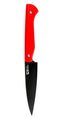
The result is a semi-flex boning knife in MagnaCut stainless steel at 0.090″ thick, with a 5 7/8″ blade and 11″ overall length. At just 4.43 oz, it’s light enough for all-day processing without hand fatigue. We designed the chunky G10 handle specifically for extended sessions and larger hands.
A subtle kick-up at the blade tip prevents hang-ups during rapid processing. The blade has enough flex to work around bones and joints but holds more rigidity than a fillet knife, making silver skin removal, fat trimming, and muscle separation equally controlled.
The Boning Butcher comes in a black PVD finish or a working grind finish, both in MagnaCut stainless steel. And like every MKC blade, the MKC Generations® promise backs it with free resharpening for the knife’s life, even if that outlasts yours.
What NOT to Use the Best Boning Knife For
A boning knife is a precision tool, not a workhorse for every kitchen task. Knowing its limits protects both the blade and your fingers.
Don’t cut through bones. A boning knife works around bones, not through them. Striking bone directly with a thin blade can chip the edge, snap the tip, or cause the knife to skip unpredictably. For splitting bones, reach for a cleaver or invest in a breaking knife.
Skip frozen food. Frozen meat and fish create enormous resistance against a thin blade. Use a heavier knife or thaw proteins before cutting.
Avoid general chopping. A boning knife’s narrow profile and flex make it a poor choice for dicing onions or mincing garlic. That’s a chef’s knife’s work.
Never pry or lever. Using a boning knife to pop joints or pry bones apart will bend or break the blade. Separate joints by cutting through connective tissue, not by forcing them apart.
How to Care for and Sharpen a Thin Boning Blade
A thin, semi-flex boning knife needs different maintenance than a thick-spined chef’s knife.
Hone before every session. The micro serrations along a boning knife’s cutting edge bend and misalign with use. A smooth honing rod realigns them quickly and keeps the blade cutting cleanly between sharpenings. The Bearded Butchers hone their blades every time they pick them up.
Sharpen regularly on a fine stone. The Bearded Butchers run a three-sided Norton sharpening stone with mineral oil treatment once per week. MagnaCut resharpens more easily than most premium stainless steels at comparable hardness, so frequent sharpening maintenance stays simple even on a busy schedule.
Use a slightly steeper angle. Boning knives perform best at 15–20 degrees per side, a few degrees steeper than a typical chef’s knife edge. That added durability matters when the blade contacts bone and connective tissue throughout a session.
Hand wash and dry immediately. Never toss a boning knife in the dishwasher. Wash with hot soapy water, dry completely, and store in a sheath or knife block. A naked blade rattling around in a drawer dulls the edge and risks accidental cuts.
Frequently Asked Questions About Boning Knives
What is a boning knife used for?
A boning knife removes bones from meat, poultry, and fish. It also trims fat, peels silver skin, separates muscle groups, and works through connective tissue. The narrow blade and pointed tip give precise control in tight spaces where wider knives can’t reach.
What’s the difference between a boning knife and a fillet knife?
Boning knives are shorter (typically five to seven inches) with a semi-stiff or stiff blade built for working around bones and joints. Fillet knives are longer and more flexible, designed specifically for separating fish flesh from skin and bone. A boning knife can handle some fillet tasks, but a fillet knife usually lacks the rigidity required for heavy deboning.
What size boning knife is best?
Six inches is the best boning knife size. It balances reach and control for poultry, pork, beef, and small game. Drop to five inches for detail-heavy poultry work. Move up to seven inches for large beef cuts and big game quarters.
Can you use a boning knife in the field?
Yes. A boning knife works well for field processing, especially when pulling meat off bone after skinning. Montana Knife Company’s Boning Butcher crosses from the processing room to the field, and our dedicated Field Boning Knife is built specifically for in-the-field deboning on a hunt.
How often do you sharpen a boning knife?
Sharpening frequency depends on usage. Home cooks who process a chicken or two per week can go several weeks between sharpenings if they hone the blade before each session. High-volume users like the Bearded Butchers sharpen weekly. MagnaCut resharpens quickly on a standard whetstone, keeping maintenance fast.
What steel is best for a boning knife?
Look for a stainless steel with strong edge retention, high corrosion resistance, and easy sharpening. Traditional options like AEB-L and 440C work well for budget boning knives. At the premium end, MagnaCut sets the current standard. It combines the toughness of hard-use tool steels with corrosion resistance that outperforms most other options.
MKC’s Boning Butcher uses MagnaCut for exactly those reasons. It holds a keen, thin edge through long processing sessions and stands up to the wet, messy conditions boning knives live in.
by Josh Smith, Master Bladesmith and Founder of Montana Knife Company
with The Bearded Butchers, Seth & Scott Perkins, CEOs of Whitefeather Meats & Bearded Butcher Blend Seasoning