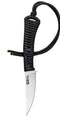
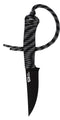
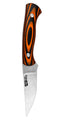
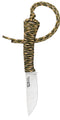
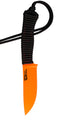
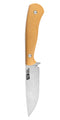
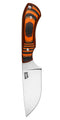
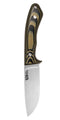
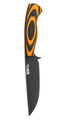
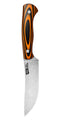
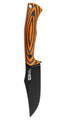
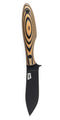
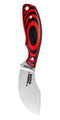
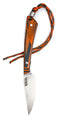
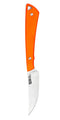
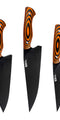
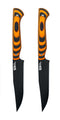
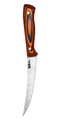
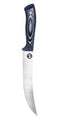
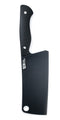
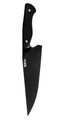
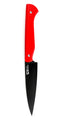
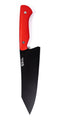
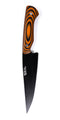
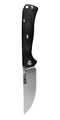

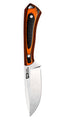
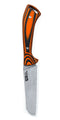

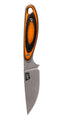
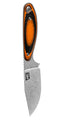
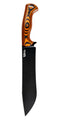
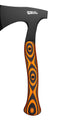
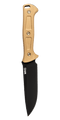
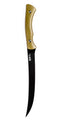
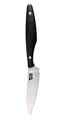



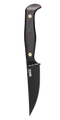

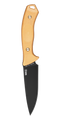











Here at Montana Knife Company, we spend a lot of time talking about how we craft our blades. It’s time our handles got some attention, too.
I’m often asked why we make our knives with G10 handles vs. Micarta or other alternatives. Every handle material has its own benefits and drawbacks, but we think G10 comes out on top.
Let’s explore why.
What Are G10 Knife Handles?
G10 is a composite material. Crafting it involves compressing layers of fiberglass and epoxy resin under high pressure, then heating them until they cure. It’s one of the most durable knife handle materials available, so it’s the superior choice for knives designed to last a lifetime.
G10 is also easy to work with. We can make it in just about any color, and our grip texture options are virtually limitless. G10 is lightweight in relation to its volume, which keeps our MKC blades light and easy to carry.
From a manufacturing standpoint, every G10 knife handle is easy to make look the same. Reproducible quality is important when selling a good product. The customer always gets what they see, unlike with wood handles, which vary with each cut of wood.
G10’s production process is consistent, controlled, and nearly identical every time. It’s easy to create a flawless G10 stock to carve into a knife handle. The same can’t be said for natural materials like wood and antler.
Finally, G10 is safe. It’s ergonomic and grippy, and the better your grip, the safer your experience.

G10 Handle vs. Wood: Why We Don’t Use Wood Handles
I’m sure we have many fans who feel an affinity for wood handles. I do, too. Wood handles can be beautifully imbued with nostalgia and natural patina, especially when they’re well cared for.
However, wood poses unique challenges that G10 doesn’t.
Wood is a natural material, and every piece is unique, which means every piece has its own flaws. Sourcing pieces with even color and hardness, free of cracks, wormholes, and knots, can be a challenge.
Wood harvesting’s environmental impact is an important consideration as well. We don’t like the idea of sawing down acres of rainforests, and there’s no way to do it sustainably for the number of knives we make. This is especially true for exotic hardwood species, which have become increasingly difficult to source in recent years.
Here at MKC, we avoid wood principally because of its inadequate strength and durability. It’s true that some wood handles can last a long time with conscientious care, but G10 thrives on abuse.
As a natural, organic material, wood changes over time. It cracks under extreme conditions (heat, cold, etc.), dries out, and absorbs moisture like water and blood. Every longtime knife owner has at some point cranked down screws on a wooden handle that’s long past its prime.
Wood also tends to warp and create gaps over time, especially if one side gets wet and the other doesn’t. Wood is less durable on impact, and while we don’t exactly recommend using your knife to hammer in tent stakes, sometimes it’s the only tool you have.
Yes, wood is beautiful and nostalgic, but it’s far less functional than G10. That’s not to say it can’t make a decent handle, but there’s no contest when comparing G10 handles vs. wood.
G10 Handle vs. Micarta: Why We Don’t Use Micarta Handles
G10 handles vs. Micarta have similar production methods. Instead of using fiberglass and epoxy resin, Micarta’s crafting process can feature other resins and fibers to create a visually and texturally unique product. For example, organic textiles like linen, canvas, cork, and cotton are common Micarta substrates.
G10 is also easier to work with from a machining standpoint, and it has a more vibrant palette. G10 is harder when cured, so it has a slightly different feel in hand. Because of that hardness, G10 holds its shape over time, while Micarta can sometimes develop wear spots in high-friction areas.
Micarta also tends to be less flashy. Its textiles and substrates limit the product’s final color palette, and its strength and durability depend on its materials.
That’s Micarta’s biggest downfall: because a wide range of substrates and resins fall under its umbrella, you may never know its exact composition. It’s hard to know how to care for it, how it’ll react to different environments, and how much abuse it can take.
G10 Handle vs. Other Handle Materials
While we think G10 is the king of knife handle materials, that doesn’t mean it’s your only option. Besides wood and Micarta, you might also see antler, horn, leather, carbon, metal, and even more exotic materials on knives.
While each material has its own positives and negatives, none of them can meet or exceed G10’s real-world performance. G10 is stable, ergonomic, durable, long-lasting, non-porous, and inert. While other handle materials have aesthetic value, no material has greater utility.
Caring for Your G10 Knife Handle
Part of the G10 handle’s beauty is its low-maintenance requirements: just keep it clean with hot, soapy water.
G10 is as strong as any material can be at its thickness. It never moves, changes shape, or loses form. It doesn’t shrink when it dries out, and it doesn’t stain.
Because G10 is non-porous, it’s hygienic. Whether you’re working in blood, guts, mud, or otherwise, G10 always washes clean with soap and water. Plus, since it’s so dimensionally stable, you don’t have to worry about germs working their way into your knife’s cracks and crevices.
G10’s non-porous nature also means it’s waterproof. While we never recommend soaking your MKC knives in water, doing so won’t damage the handle. By comparison, moisture damages wood and leather.
G10 is just as resistant to chemicals, too, so if you ever need to disinfect it heavily, you can do so without worry.
If a G10 knife handle seems dull, soak it in a mix of mineral oil and paint thinner or acetone to restore its color. The same is true of Micarta. A thin coat of our MKC Blade Wax can also bring new life to your knife handle, whether it’s G10, wood, Micarta, or otherwise.
G10 Handle vs. Micarta vs. Wood: Which Is Best?
G10 knife handles are durable and long-lasting. Plus, they’ve got great aesthetics. They may not have the same nostalgic feel as wood, but we’d still choose G10 again and again. G10 handles help our MKC knives last for generations, and they keep them relevant in a wide variety of real-world situations.
We design our knives to work hard for hard-working people, and G10 keeps up every step of the way. Which would you rather have in an emergency: a handle that could split or splinter under stress, or one that’s built to tackle whatever you throw at it?
by Josh Smith, Master Bladesmith and Founder of Montana Knife Company